Church Event Planning Checklist: A Step-by-Step Guide for Successful Ministry Events
Planning a church event can be exciting, meaningful, and a little overwhelming. Whether you are organizing a church picnic, volunteer appreciation night, women’s ministry gathering, outreach event, youth activity, potluck, fundraiser, or holiday celebration, a clear church event planning checklist helps keep everyone on the same page from the first idea to the final cleanup.
Quick Answer: Church Event Planning Checklist
A strong church event planning checklist should help your team define the purpose of the event, choose the date, reserve the space, build a volunteer team, collect RSVPs, organize supplies, communicate clearly, prepare a day-of schedule, and follow up afterward.
Church events matter because they create space for people to connect, serve, invite friends, build relationships, and experience community outside of a regular Sunday service. But even simple events can become stressful when the details live in too many places: text threads, paper signup sheets, hallway conversations, spreadsheets, and last-minute reminders.
This guide walks through a practical church event planning checklist you can use for almost any ministry event. It is written for church staff, ministry leaders, pastors, volunteers, and planning teams who want events to feel organized, welcoming, and manageable.
What This Church Event Planning Checklist Covers
- Define the purpose of the event
- Choose the date, time, and space
- Build your planning team
- Create a budget
- Recruit volunteers
- Collect RSVPs and signups
- Promote the event
- Prepare your day-of plan
- Follow up after the event
1. Start With the Purpose of the Church Event
Before you book a room, order food, or ask for volunteers, clarify the purpose of the event. This step sounds simple, but it affects almost every decision that comes next.
Ask your planning team:
- Who is this event for?
- What should people experience, learn, or do?
- Is the goal fellowship, outreach, discipleship, service, fundraising, celebration, or appreciation?
- What would make the event feel successful?
A church picnic, for example, may need easy food signups, outdoor games, parking help, and cleanup volunteers. A women’s ministry brunch may need table hosts, decorations, childcare decisions, and RSVP tracking. A community outreach event may require safety planning, volunteer assignments, follow-up cards, and clear guest communication.
Planning tip: Write the event purpose in one sentence. If your team cannot explain the goal simply, the planning details will usually become harder than they need to be.
2. Choose the Date, Time, and Location
Once the purpose is clear, choose a date and location that support the people you are trying to reach. For church events, this often means checking the church calendar, school calendars, holidays, sports seasons, volunteer availability, and any major community events nearby.
When choosing a date, consider:
- Whether the event conflicts with worship services, small groups, youth events, or ministry nights
- How much setup and cleanup time the team needs
- Whether families with children can realistically attend
- Whether the event should happen indoors, outdoors, or both
- Whether weather backup plans are needed
Reserve the space as early as possible. Confirm which rooms, restrooms, entrances, kitchens, storage areas, outdoor spaces, tables, chairs, sound equipment, projectors, and parking areas will be available.
If the event is larger or open to the public, it is also wise to think through basic safety and crowd flow ahead of time. FEMA’s special event planning resources emphasize pre-event planning, team formation, hazard analysis, and incident response for special events, which are useful principles even when your church event is smaller and simpler.
3. Build a Planning Team With Clear Ownership
One of the most common church event planning mistakes is letting one person carry too much of the work. Even a small event usually needs multiple people handling different areas.
Instead of asking, “Who can help?” assign clear roles. A strong church event planning team may include:
- Event lead: Owns the overall plan and final decisions
- Volunteer coordinator: Recruits and communicates with helpers
- Food lead: Manages meals, snacks, drinks, or potluck items
- Setup lead: Handles tables, chairs, signage, supplies, and layout
- Hospitality lead: Greeters, check-in, name tags, and guest welcome
- Childcare lead: If children are attending or childcare is provided
- Cleanup lead: Makes sure cleanup has its own team, not just whoever is left
Clear ownership prevents confusion. It also helps volunteers feel confident because they know exactly what they are responsible for before the event begins.
4. Create a Realistic Event Budget
Not every church event needs a large budget, but every event should have a budget owner. Even free events can involve costs such as food, paper products, decorations, printing, childcare supplies, activity materials, honorariums, rentals, or extra cleaning needs.
Start with a simple list of expected expenses:
- Food and drinks
- Decorations and table supplies
- Games or activity materials
- Printed signs, flyers, or cards
- Childcare supplies
- Audio/visual or rental equipment
- Speaker, musician, or vendor costs
- Emergency or backup supplies
For churches and nonprofits, good recordkeeping matters. The IRS notes that exempt organizations must keep books and records that show compliance with tax rules and document receipts and expenses. For event planning, that means saving receipts, tracking reimbursements, and keeping event-related financial notes organized.
Budget question to ask early
Will the event be free, donation-based, ticketed, sponsored, or ministry-funded? Answering this early helps your team make better decisions about food, supplies, promotion, and registration.
5. Recruit Volunteers Before the Last-Minute Rush
Volunteers are often the difference between a stressful church event and a smooth one. The key is to recruit early and make each role specific.
Instead of saying, “We need help with the picnic,” ask for clear roles such as:
- 2 people for parking
- 3 greeters at the entrance
- 4 people for food setup
- 2 people to refill drinks
- 1 person to monitor trash and supplies
- 3 people for children’s activities
- 4 people for cleanup
The more specific the signup is, the easier it is for people to say yes. Volunteers are more likely to help when they understand the time commitment, arrival time, task, and who to report to.
This is also where an online event tool can save a lot of back-and-forth. With SameTeam’s church event planning software, organizers can create one shareable event link for RSVPs and signups, so guests do not need an account, app, or login just to respond or volunteer.
6. Collect RSVPs Early
RSVPs are not just about knowing who might attend. They help your church make practical decisions about food, seating, childcare, supplies, parking, and room setup.
For many church events, the most helpful RSVP information includes:
- Name
- Email address
- Yes, no, or maybe response
- Number of people attending
- Optional note or special detail
Try to set an RSVP deadline that gives your team enough time to adjust. For food-heavy events, a deadline several days before the event can prevent overbuying or scrambling. For larger events, you may need a longer planning window.
Make the RSVP process simple. If people have to create an account, download an app, or search through a long email thread, fewer people will respond. A single link is usually best.
7. Organize Food, Supplies, and Signup Items
Church events often involve more than attendance. You may also need people to bring food, donate supplies, serve in time slots, or claim specific volunteer roles.
Common signup items include:
- Main dishes, sides, desserts, and drinks
- Paper plates, napkins, cups, and utensils
- Coolers, ice, serving utensils, and tablecloths
- Setup and cleanup shifts
- Greeter, parking, food table, and registration roles
- Games, craft stations, or children’s activity helpers
Avoid vague signup lists. “Bring food” is less helpful than “Bring one side dish for 10 people.” “Help with setup” is less helpful than “Setup tables and chairs from 4:00–5:00 p.m.” Clear signups reduce duplicate items and unanswered questions.
8. Promote the Event Clearly
Promotion works best when the message is simple and repeated in several places. Most people need to hear about an event more than once before they remember to RSVP or sign up.
Use the same basic details everywhere:
- Event name
- Date and time
- Location
- Who should attend
- What to bring
- How to RSVP or sign up
- Deadline, if there is one
Promote the event through announcements, church emails, ministry newsletters, social media, printed flyers, small group leaders, volunteer teams, and your church website. For family events, include details parents care about, such as childcare, food, parking, cost, and whether guests are welcome.
9. Prepare a Day-of Event Timeline
A day-of timeline helps everyone know what should happen and when. It does not need to be complicated, but it should include setup, volunteer arrival, doors opening, food timing, activity timing, announcements, cleanup, and final lockup.
Here is a simple example:
- 3:00 p.m. Setup team arrives
- 4:00 p.m. Food team arrives
- 4:30 p.m. Greeters and parking volunteers arrive
- 5:00 p.m. Event begins
- 5:15 p.m. Welcome and opening prayer
- 5:30 p.m. Food served
- 6:15 p.m. Games, activities, or program
- 7:00 p.m. Closing announcement
- 7:15 p.m. Cleanup begins
- 8:00 p.m. Final walkthrough
Send the timeline to team leaders before the event. If volunteers only receive instructions when they arrive, the event lead will spend the whole day answering questions.
10. Plan for Setup, Cleanup, and Follow-Up
Setup and cleanup deserve as much attention as the event itself. Many church events start with plenty of helpers and end with a tired handful of people stacking chairs. Assign cleanup before the event begins.
Your cleanup plan should include:
- Trash and recycling
- Kitchen cleanup
- Tables and chairs
- Bathrooms and common areas
- Lost and found
- Returning borrowed items
- Final room walkthrough
After the event, send a thank-you message to volunteers, ministry leaders, and anyone who donated food or supplies. If the event was for outreach, follow up with guests while the connection is still fresh.
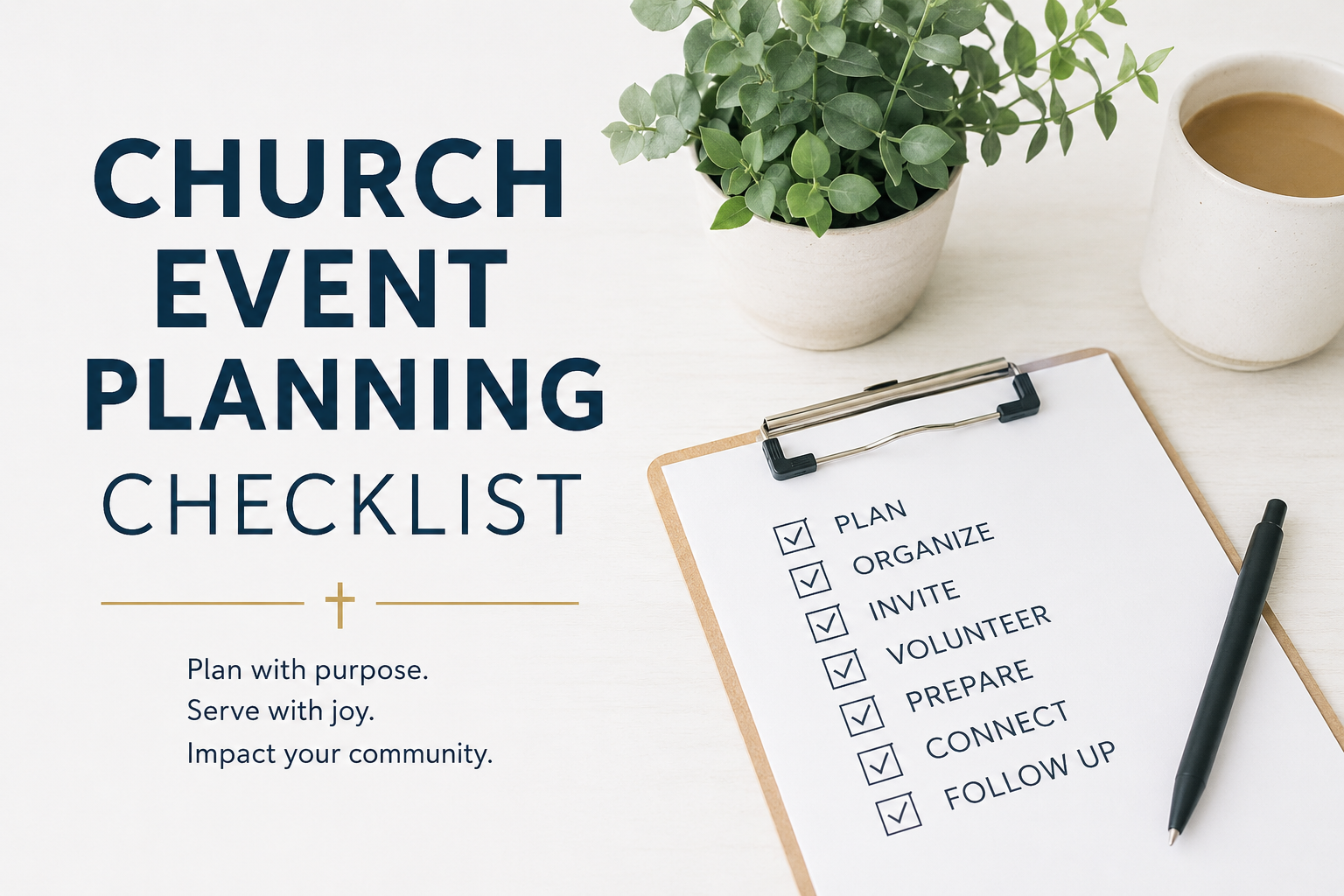
Printable Church Event Planning Checklist
Use this simple checklist as a quick reference for your next church event.
Common Church Event Planning Mistakes to Avoid
Even experienced teams can run into the same planning problems. Watch for these common mistakes:
- Waiting too long to recruit volunteers. Last-minute asks often lead to stress and unclear roles.
- Not collecting RSVPs. Guessing attendance makes food, seating, and childcare harder.
- Using too many communication channels. Details get lost when they are split between texts, emails, paper lists, and hallway conversations.
- Forgetting cleanup. Cleanup should have a leader and assigned helpers before the event begins.
- Making guests work too hard to respond. Keep RSVPs and signups simple, especially for visitors and families.
How SameTeam Helps Churches Plan Events
Church event planning is easier when the important details live in one place. SameTeam gives organizers one simple link for RSVPs and signups, so guests can respond, claim items, or volunteer without creating an account or downloading an app.
Churches can use SameTeam for potlucks, picnics, ministry gatherings, volunteer events, youth nights, small group meals, outreach events, holiday celebrations, and more. Organizers can see responses, track signups, and share event details without juggling spreadsheets or paper signup sheets.
You can learn more on the Church Event Planning Software page, or visit the SameTeam homepage to create your first event free.
Church Event Planning Checklist FAQs
How far in advance should a church start planning an event?
For small events, a few weeks may be enough. For larger church events, outreach events, holiday programs, fundraisers, or events involving childcare and food, start planning several months ahead when possible. The more volunteers, supplies, promotion, and approvals involved, the earlier you should begin.
What should every church event planning checklist include?
Every church event planning checklist should include the event purpose, audience, date, location, budget, planning team, volunteer roles, RSVP process, signup needs, promotion plan, day-of timeline, setup plan, cleanup plan, and follow-up tasks.
How do churches keep event planning organized?
Churches can keep event planning organized by assigning clear team leaders, using one central place for RSVPs and signups, setting deadlines, sending reminders, and creating a day-of timeline. The fewer places details live, the easier the event is to manage.
What is the easiest way to collect church event RSVPs?
The easiest way is to use one shareable RSVP link that guests can open from an email, text, social post, or church announcement. Avoid requiring guests to create an account or download an app just to RSVP.
Do church events need volunteer signups?
Most church events benefit from volunteer signups, even if the event is small. Clear signup roles help people know exactly how to help and prevent the same few people from carrying all the work.
Plan Your Next Church Event With One Simple Link
SameTeam helps churches collect RSVPs, organize volunteer signups, and share event details without guest accounts, apps, ads, or messy spreadsheets. Create your first event free and make planning easier for your next ministry gathering.